
Why Gravure Sustainability Is One of the Industry’s Most Misunderstood Topics
Gravure has long carried a reputation for being one of the less sustainable printing technologies. For many people in the industry, that perception comes from older production methods that relied on materials and processes with a heavier environmental footprint.
That perception, however, no longer reflects the full picture.
Over the past decade, gravure has undergone major changes. Advances in cylinder reuse, material recovery, engraving technology, and chrome alternatives have helped reshape the sustainability profile of the process. As a result, gravure today is far more aligned with circular production principles and resource efficiency than many people realize.
For companies evaluating print technologies through a sustainability lens, it is worth taking a closer look at how much gravure has evolved.
Why gravure has been seen as unsustainable
The sustainability concerns around gravure did not appear without reason. Historically, the industry relied on practices such as Chrome VI and the repeated production of new steel bases for cylinders. These methods contributed to the belief that gravure created more waste and posed greater environmental challenges than other print processes.
Those older practices shaped industry perception for years. Even today, many decision-makers still associate gravure with the environmental standards of the past rather than the reality of current innovation.
The problem is that these outdated assumptions often overlook the improvements that have already been implemented across much of the industry.
Reusable cylinders reduce waste significantly
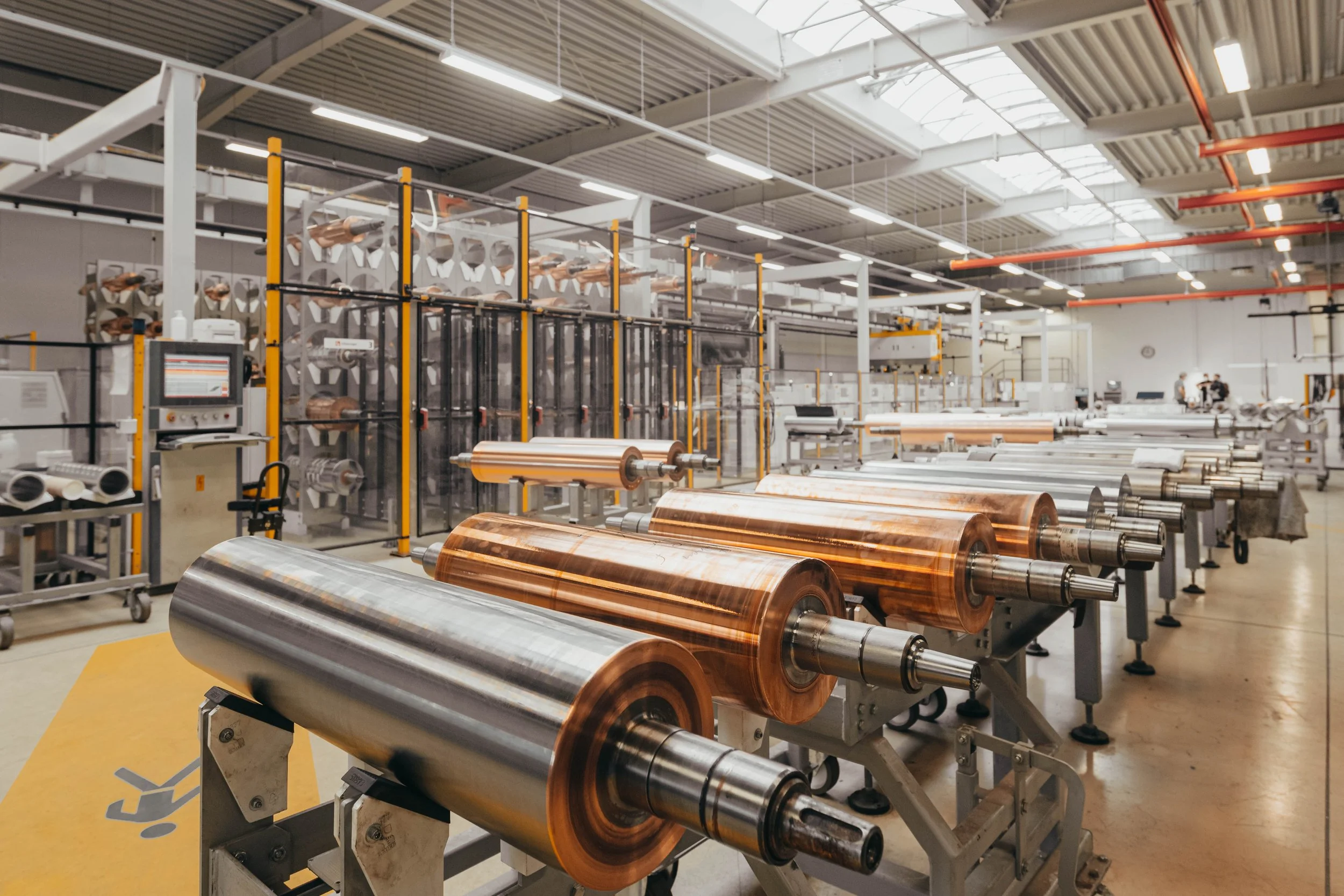
One of gravure’s strongest sustainability advantages is cylinder reusability. Unlike image carriers in some other printing processes that need to be remade more frequently, gravure cylinders can be reused many times over their lifecycle.
This has a direct impact on waste reduction. Reusing the same steel base again and again lowers the need for new raw materials and reduces the amount of discarded production components. In high-volume or repeat-run environments, this creates meaningful long-term environmental value.
For businesses producing recurring designs, cylinder reuse also supports a more resource-efficient workflow by extending the usefulness of existing assets rather than replacing them unnecessarily.
Closed material cycles support a circular process
Another major shift in gravure sustainability has come from the development of more circular material handling. Materials such as steel, copper, and Chrome III can be recovered, recycled, and returned into the production cycle.
This matters because sustainability is not only about reducing consumption at the printing stage. It is also about how materials move through the full system. When valuable materials are recovered and reused rather than discarded, the environmental footprint of cylinder production becomes far more controlled.
Closed-loop processes help reduce waste, lower dependence on virgin materials, and improve the overall efficiency of the manufacturing cycle. In that sense, gravure is increasingly aligned with the broader industrial move toward circularity.
Laser engraving improves efficiency and reduces ink use
Laser-engraved cylinders are another important development in the sustainability progress of gravure. This technology improves control over ink transfer by allowing the cylinder surface to deliver the right amount of ink more precisely.
That precision can lead to lower ink consumption without sacrificing print quality. Reduced ink use has clear environmental benefits, especially over long production runs where even small efficiency gains can add up significantly.
In addition to lowering material use, better ink efficiency can also help reduce associated costs and waste across the print process. For converters focused on both sustainability and operational performance, laser engraving offers a valuable step forward.
Consistent output helps reduce production waste
Production waste is often overlooked in sustainability discussions, yet it plays a major role in the overall environmental performance of a print technology.
Gravure is known for its ability to deliver stable, repeatable, high-quality output, especially across long runs. That consistency helps minimize waste caused by print variation, setup issues, or quality deviations during production.
When output remains consistent, fewer materials are lost to rejects, rework, or unnecessary adjustments. This makes gravure particularly efficient in applications where long-run stability is essential.
In practical terms, sustainability is strengthened when a process produces fewer errors, fewer interruptions, and fewer wasted materials over time.
Chrome alternatives are reshaping the process
One of the most important environmental developments in gravure has been the industry’s move toward safer chrome alternatives. The transition away from Chrome VI and toward options such as Chrome III and polymer coatings is helping modernize the process and reduce its environmental and health-related concerns.
This change represents more than a technical update. It signals a broader effort within the gravure industry to improve sustainability at the material level and adapt to higher environmental expectations.
As adoption expands, these alternatives are likely to play an even bigger role in defining the future of gravure cylinder production.
The perception gap is still a challenge
Despite these improvements, gravure still faces a communication challenge. Many buyers, converters, and brand teams continue to evaluate the process based on outdated assumptions. The technology has advanced, but the market’s perception has not always kept pace.
This perception gap matters because sustainability decisions are often influenced as much by reputation as by technical reality. If gravure is judged only by its past, many of its current advantages can be overlooked.
That is why conversations around gravure sustainability need to become more specific, more current, and more grounded in what the industry is doing today.
Gravure’s role in a more sustainable print future
Gravure still has areas where continued improvement is important, as every print technology does. But the idea that gravure is inherently unsustainable no longer reflects the progress that has been made.
With reusable cylinders, closed material cycles, laser engraving, lower production waste, and safer surface technologies, gravure has moved much closer to the standards expected from modern, environmentally conscious manufacturing.
For the right applications, especially those involving long runs, repeat jobs, and strong quality requirements, gravure can be part of a highly efficient and more circular production model.
Conclusion
The belief that gravure is unsustainable is one of the biggest myths still circulating in the print industry.
While older practices contributed to that reputation, the technology has evolved significantly. Today’s gravure process includes real sustainability gains that deserve far more recognition, from cylinder reuse and recycling to ink efficiency and chrome alternatives.
As the industry continues to innovate, gravure is increasingly showing that it can support a more circular, efficient, and environmentally responsible future for printing.