
Gravure Cylinder: How It Works and Why It Matters
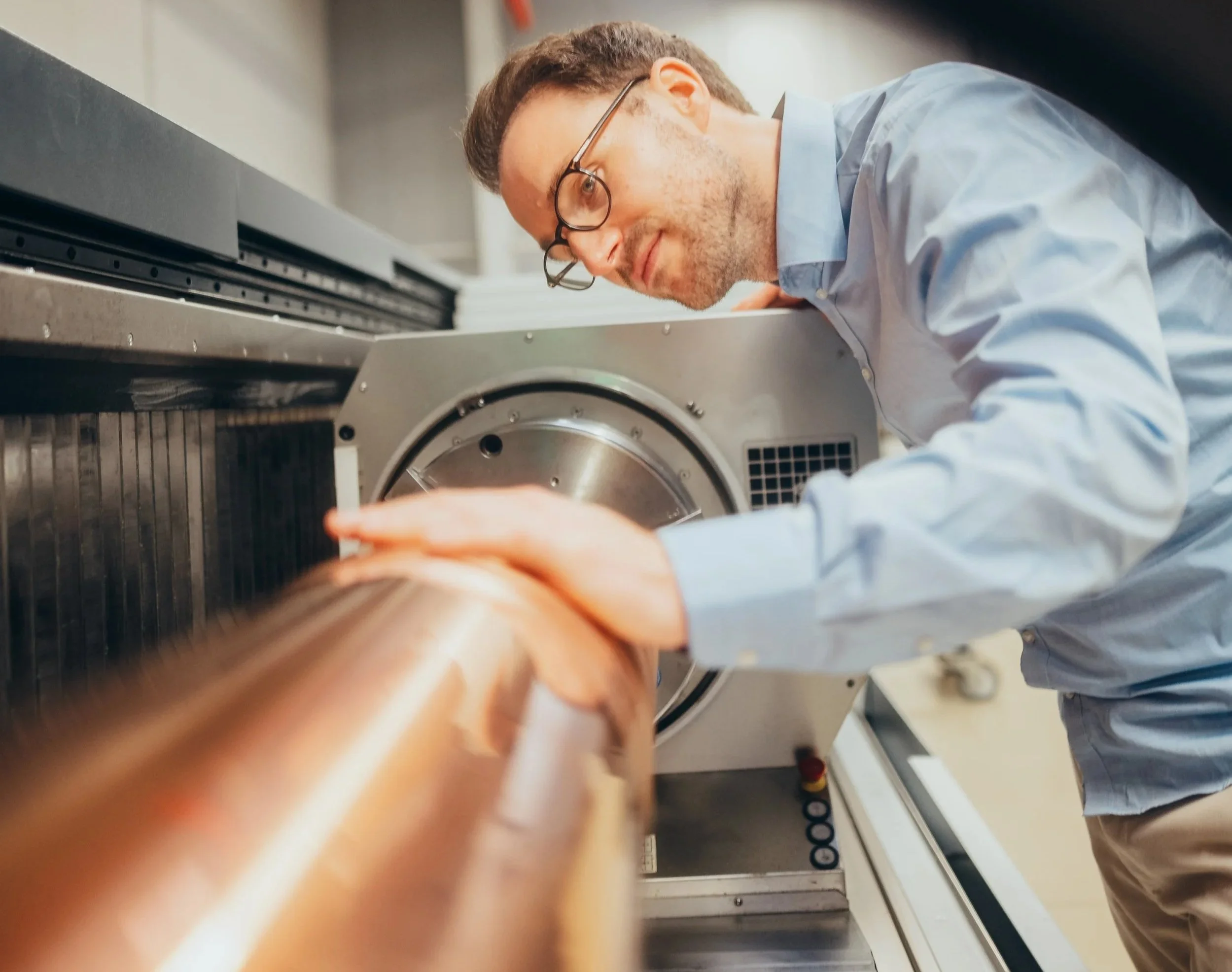
A gravure cylinder is a precision-engineered metal cylinder used in rotogravure printing. It contains thousands of engraved cells that hold ink and define the printed image.
How a Gravure Cylinder Works
During printing, the cylinder rotates through an ink bath, filling its engraved cells. A doctor blade removes excess ink from the surface, ensuring that only the cells retain ink. As the substrate passes over the cylinder, the ink is transferred from the cells onto the material.
Each cylinder is designed for a specific print job, with cell geometry optimized for color, ink volume, and print quality.
Why Gravure Cylinders Matter
The quality of the gravure cylinder directly impacts print performance. Cell depth, shape, and engraving precision influence:
Color density
Ink consumption
Print consistency
Optimized cylinders can significantly improve efficiency and reduce costs.
Typical Use Case
Gravure cylinders are widely used in packaging production, where consistent branding and high-quality visuals are required across large volumes.
Related Topics
Gravure Printing
Gravure Engraving
Cell Geometry
Digital Prepress